The parent
You love your child and you love your church, and lately those two things feel like they’re pulling in opposite directions. This gives you something solid to stand on that doesn’t ask you to give up either one.
For everyone who was told to pick one
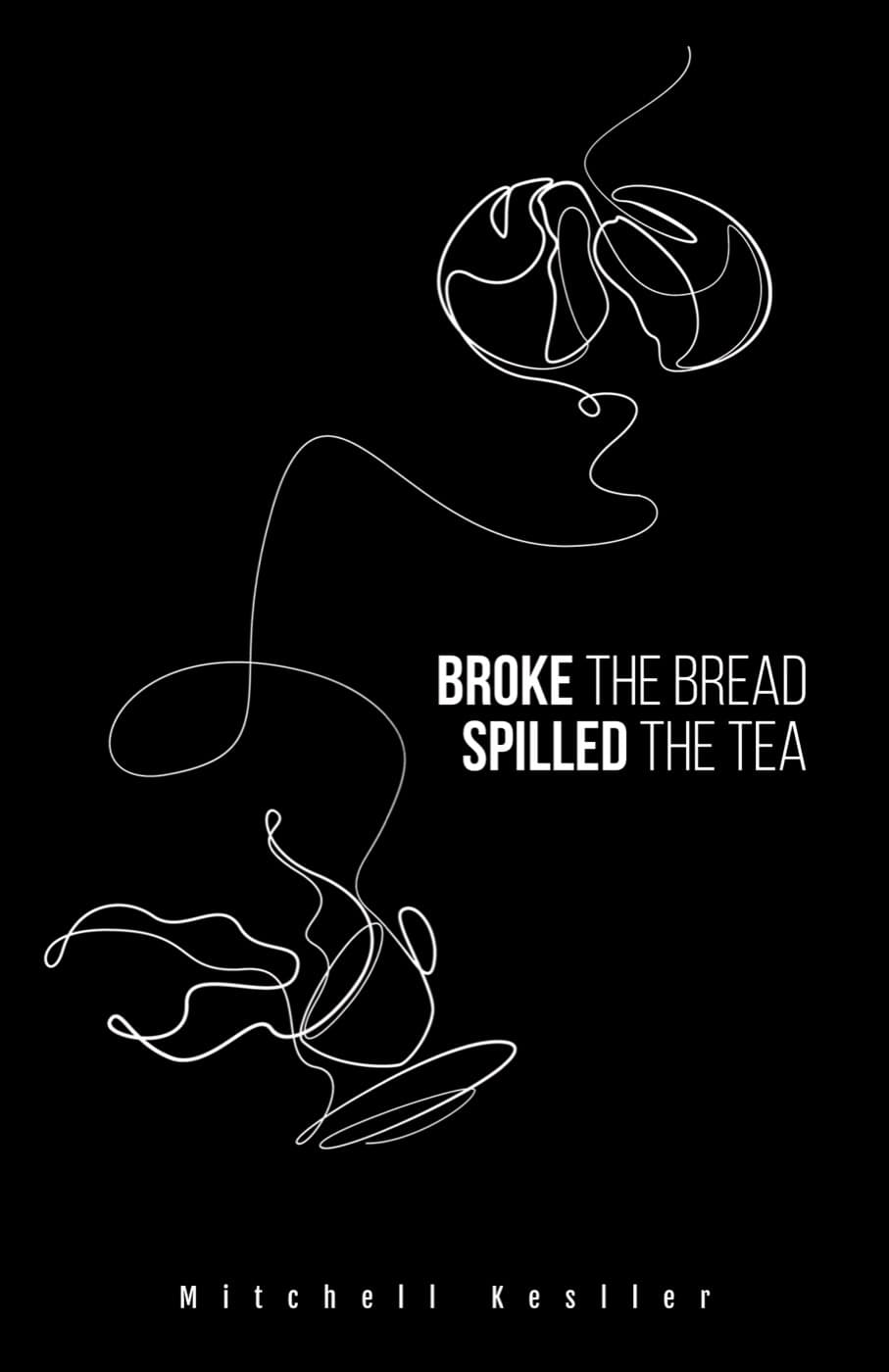
This isn’t a book that asks you to stop believing. It’s a book that asks you to read more carefully, written by a pastor’s kid who spent years looking for a reason to stay.
$9.99 paperback · $7.99 eBook · free on Kindle Unlimited
Short enough to read this weekend. Honest enough to change the conversation.
From the author
I was the ideal pastor’s kid. Fourth generation. I started the youth ministry at my own church. I had a Bible with me everywhere I went.
I also spent years believing God had made a mistake when He made me bisexual. That’s what I’d been taught, twice a week, by people who loved me and were certain they were right.
So I did the only thing I knew how to do. I studied. I sat through seminary workshops. I read the six verses in Hebrew and in Greek, and I checked the dates, the surrounding chapters, the words that turn up nowhere else in ancient literature. What I found wasn’t a loophole. It was a translation problem that’s been quietly compounding for centuries.
This book isn’t an argument against your faith. It’s the research I went looking for when I needed a reason to keep mine.
Mitchell KesllerAuthor · Orlando, FL
You love your child and you love your church, and lately those two things feel like they’re pulling in opposite directions. This gives you something solid to stand on that doesn’t ask you to give up either one.
You were told you were an abomination by people quoting a book you still believe in. This walks through every one of those verses and shows you what they actually say.
The sibling, the friend, the small-group leader who wants to say something useful at the next family dinner and keeps running out of words. Here are the words.
What’s inside
These are the six you’ve probably had quoted at you. Here’s what each one is used to prove, and the question sitting underneath it. The book takes all six apart properly. No jargon, no seminary required.
Sodom and Gomorrah
God destroyed two cities for homosexuality.
So why, when Ezekiel names the sin of Sodom outright, does he list pride, excess, and refusing to help the poor, and never mention sex at all?
The Holiness Code
“Thou shalt not lie with mankind… it is an abomination.”
The chapter opens by stating its own purpose: do not do as they do in Egypt and Canaan. So what, specifically, were they doing there?
The Penalty
The death penalty proves how serious the sin is.
Four verses earlier, the same chapter prescribes death for cursing a parent. Who decided which of the two still counts?
Malakos & Arsenokoites
Paul lists homosexuals among those excluded from the kingdom.
Paul seems to have coined the word arsenokoites himself. If it plainly meant what we’re told it means, why does it turn up almost nowhere else in Greek? And where it does, why does it sit beside economic exploitation?
The Second Use
Paul repeats the condemnation to Timothy.
Timothy was about thirty, living in a Greek world where men his age routinely took a teenage boy as a lover. What if Paul was warning him about something far more specific than we assume?
Against Nature
Paul calls same-sex desire unnatural.
The passage describes people abandoning their own practice in the middle of pagan temple worship. And if you read one chapter further, who does Paul turn the whole argument on?
Nobody ever sat you down and walked you through these. That’s the whole book.
4.36 on Goodreads · 66 ratings
Under the radar, well researched, well written.
An essential guide for those who desire an honest, condensed, and intelligent approach to LGBT+ issues in The Bible. Not only worthwhile, but reinvigorating, restorative, and worthy of passing along at will.
The kind of thing I could see handing to moderately conservative relatives who still think the Bible is against LGBT+ folks. Short, very accessible and easy to understand.
The opposite. It’s written by a believer, from inside the faith, and it takes scripture seriously enough to read it in the original languages. The argument is that the church has misread six verses, not that the Bible should be thrown out.
No. It’s 157 pages in plain language, and every verse in chapter 5 closes with a bite-sized summary that puts the traditional reading and the contextual one side by side. Reviewers describe it as accessible more than any other word.
Yes. Footnotes throughout, plus a reference list of academic journals and lexicons at the back. The reviewers who came in skeptical singled this out first.
It was written with you in mind as much as anyone. Readers describe it as the book they could hand to a moderately conservative relative: it explains without attacking.
157 pages. Footnoted. Written for everyone still holding on to both.
$9.99 paperback · $7.99 eBook · free on Kindle Unlimited
Hardcover, paperback, eBook & Kindle Unlimited